
Cement and Concrete Tile vs Ceramic Tile
With all the talk you may have been hearing in home decorating magazines and home renovating shows about the wonders of cement tiles, you may be wondering if they’re the same as ceramic tiles, and if not, what the differences between them are. You may be asking yourself, “Which one is the better product, cement tiles vs ceramic tiles?” “What are the differences between them?” And, “Which tile type should I choose for my space?”
We have explained the different qualities of cement tiles vs ceramic tiles below so you can get a good understanding of which is the better product to invest in for your home.
Cement Tiles Vs Ceramic Tiles: How They Are Made
While cement tiles and ceramic tiles may look very similar to each other, the differences in how they are made and the features they provide are what sets them apart.
Ceramic tiles are made with red, brown, or white clay and can be either glazed or unglazed, and are fired in a coal or wood fired kiln. Ceramic backsplash tiles are often most suited for counter tops, backsplashes, walls, and mosaics. Ceramic floor tiles that are unglazed typically have a matte finish and come in either an earth red or natural brown clay tone.
Cement tiles are made from a mixture of sand, cement, color pigment, and a marble powder that is poured into metal molds, backed by a dry concrete mixture, and then compressed under 2,000 pounds of pressure. Cement tiles have high thermal mass,, acting as excellent insulators for your family’s comfort and your home’s energy bills.
The Benefits of Cement Tiles
When it comes to combining beauty with functionality, no product outshines cement tiles. They last far longer than ceramic bathroom tiles and wood, and can be customized with your own ideas to provide you with something you won’t find anywhere else.
Cement tiles can be used on the floors and walls in the kitchen, living room, foyer, dining room, bathroom, and laundry room; on the kitchen backsplash and underside of the island; they can be used on the walls to add a unique work of art; on an outdoor patio; and can be applied in unique ways to create one-of-a-kind features like tile rugs.
Here's an Example...

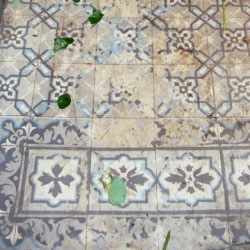
In turn of the 20th century buildings in continental Europe, you will find cement and ceramic tiles. The ceramic ones generally show much more wear and tear (in some cases revealing the underlying clay) than the cement ones.
Note About the Term: Encaustic Cement Tile
*We have italicized cement encaustic tiles because there is much debate about whether or not “encaustic cement” is a correct term or not. Because encaustic means to heat or burn in and cement tiles are not fired, scholars argue that cement tiles are not truly encaustic. Perhaps because they so closely resemble their encaustic ceramic tile cousins, the name has acquired a following.
If you’re ready to take advantage of all of the benefits of cement tiles vs ceramic tiles, then contact Granada Tile today to get started.
213.788.4238
Sales@GranadaTile.com